Something interesting is brewing in the heart of the Himalayas. Bhutan, the world’s most mountainous country, recently held its inaugural Bhutan Innovation Forum to kick-start its ambitious project of building a new city called Gelephu Mindfulness City (GMC) that it aims to position as a future hub in South Asia.
The innovation forum, held in October in Paro – a historic town west of the capital, Thimphu – gathered some of the world’s most prominent intellectuals, including the economist and Nobel laureate Joseph Stiglitz, French scientist-turned-monk Matthieu Ricard and acclaimed Danish architect Bjarke Ingels. They discussed what they imagine a modern and enlightened city would be like.
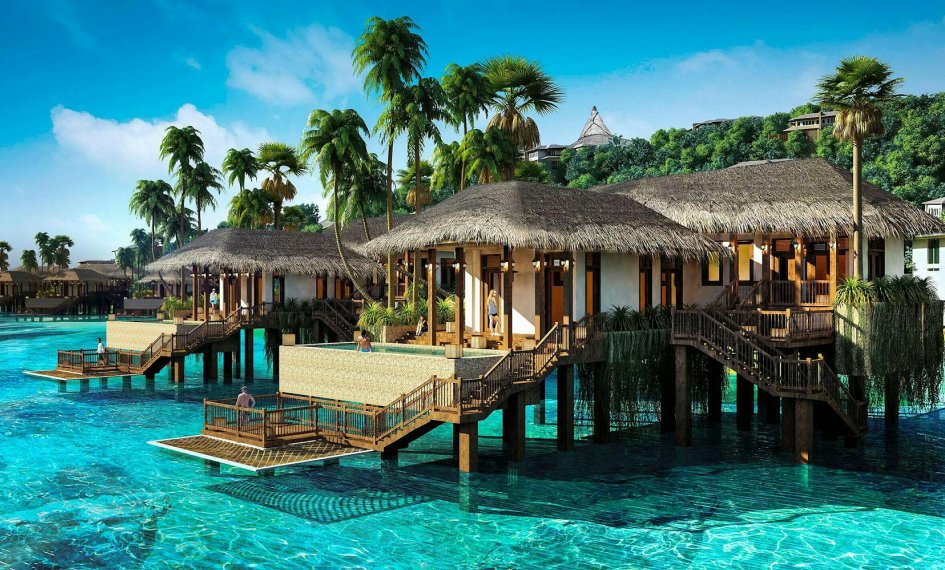
What is unique is that the new city is envisioned as an urban centre that bucks the convention of a stereotypical concrete jungle packed with soulless skyscrapers indistinguishable from one another. Instead, the goal is to build a city grounded in well-being and happiness by integrating civil infrastructure, green technologies and mindful innovation.
Of course, how this ultimately turns out remains to be seen – construction has not yet begun. Only the blueprint for transforming the existing town of Gelephu – located at the country’s border with India – into a modern special administrative region, has been released.
Certainly, through the history of civilisation, humanity has constructed countless cities. Many remain thriving metropolises, even more have faded into obscurity and others have failed even to attract a critical mass of inhabitants.
For instance, the US$100 billion (S$134 billion) luxury development of Forest City in Johor is widely regarded as a “ghost city”, while Myanmar’s sprawling capital of Naypyitaw is so shrouded in secrecy that it remains sparsely populated, with its massive yet empty multilane highways looking strangely surreal in pictures on Google.
But one thing sets GMC apart. Like Singapore, Bhutan punches well above its weight. It was only in the 1970s that the fourth king of Bhutan introduced the concept of gross national happiness (GNH), which takes a holistic view of development. With that, the tiny nation was catapulted from relative anonymity into one that the rest of the world looks towards when considering the importance of sustainability, cultural integrity and, of course, happiness in shaping policies and practices that focus on the well-being of individuals and communities.
So, as urban centres worldwide grapple with pollution, overpopulation and social disconnection, the hopeful vision for GMC is already a good starting point for reimagining how any given city might wish to evolve to remain relevant in the future.
Mindful capitalism
While the country’s commitment to gross national happiness over gross domestic product has earned global admiration, it faces a stark reality check: Existing in the modern world requires adapting to economic forces that are often beyond one’s control. Consequently, it is currently facing struggles with youth unemployment and a brain-drain, particularly as young Bhutanese leave for opportunities in countries like Australia.
This is one of the key factors motivating the creation of GMC – the country is aware it has to strike a balance between preserving cultural values and embracing modern development to secure the future of the next generation and beyond.
So, for Bhutan – and any other nation aspiring to sustainable growth – this means nurturing jobs that align with its younger citizens’ aspirations, while integrating into the broader global economy.
What makes GMC unique is its goal of fostering mindful capitalism that regards economic activity as a pathway to individual and societal well-being. “From greed is good, to cooperation is good,” professor of public policy practice Eric Beinhocker at the Blavatnik School of Government, University of Oxford, told the forum.
There are proven examples that this type of capitalism can succeed. Companies like ed-tech platform Coursera and Nordic countries like Denmark have already positively implemented variations of this economic model.
GMC’s plan, which aims to balance growth with social good, could therefore be seen as the next step towards “economics that values people over pure profit”. The aim is to focus on sustainable industries such as clean energy, high-value tourism and technological innovation that appeal both to global and home-grown talent.
There is even a Singapore connection – GMC’s regulatory framework will draw on Singapore’s proven business-friendly model. “Singapore has a set of standards that are already working very well and are easily followed by global investors, so that will form the basis of our framework,” explains Bhutan’s former prime minister, Dr Lotay Tshering, who will oversee GMC as governor.
At the same time, he emphasises that economic progress must be accompanied by societal responsibility, with a focus on investors willing to invest in the people and the locality alongside growing profit margins.
This nuanced approach to development and its potential for creating a more inclusive form of capitalism by prioritising people and the planet could chart a new course for emerging – and existing – cities around the world and is worth watching closely.
Building a city for people, not vehicles
During his keynote presentation, Denmark’s Mr Ingels showcased various design hallmarks to give the upcoming city a distinct visual identity, which is important for establishing a sense of place.
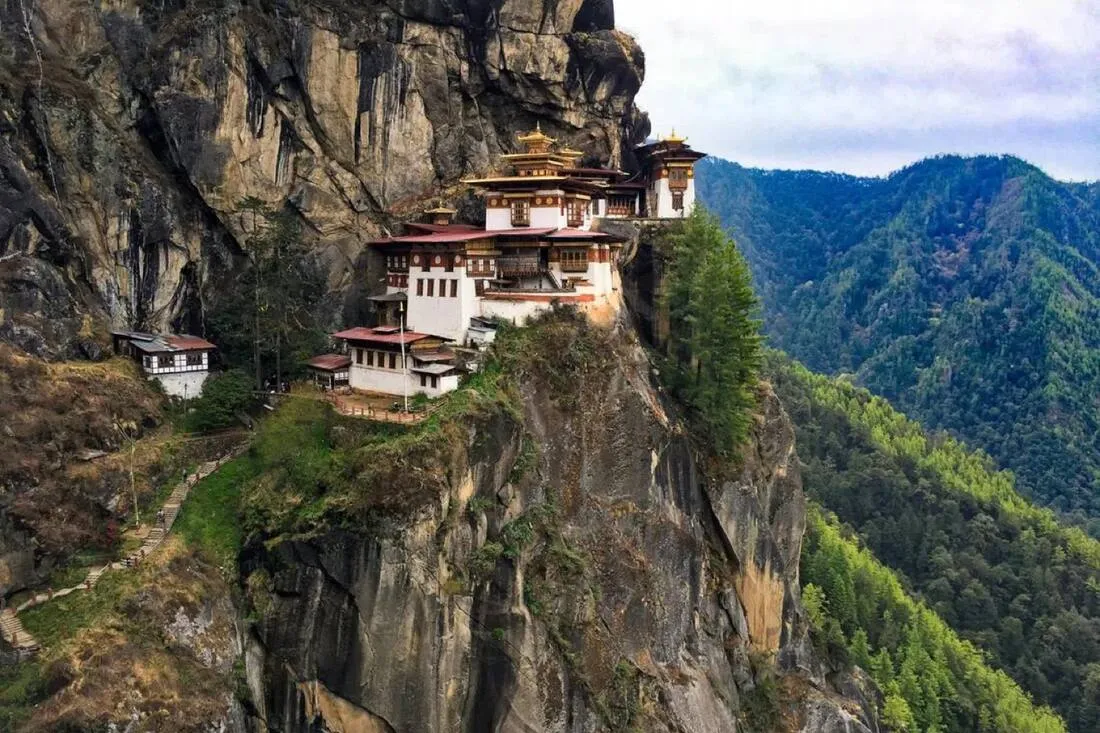
For instance, Bhutanese architecture, traditionally meant for the colder, mountainous parts of the country, can be adapted for the subtropical region of Gelephu. He envisions the city’s main landmark, the dam for its hydroelectric power station, built in a modular style – making the dam’s entire face accessible to the public. A visit to the dam could then be regarded as a “ceremonial journey”, similar to how a trek to Bhutan’s famed Tiger’s Nest monastery, the iconic symbol of the country, is a must-do on every visitor’s checklist.
But aesthetics aside, one of the most striking elements of the city plan is its car-lite focus, a stark contrast to the car-centric infrastructure of most modern cities.
So, while there are practical plans to enhance the region’s connectivity via a much-needed new international airport slated to be completed within the next five years and a rail system that links to India, the city centre itself will be as walkable as possible. The idea is to create a public transport network of trams and to populate the city with central atriums, public gathering spots and bridges that double as market or museum spaces to foster in-person interactions.
“Thinking about a modern city from this perspective is mind-opening. Too many cities in the 20th century were centred around cars and not people, so this is a major transformation in thought,” observed Professor Stiglitz.
This hits home, especially in Singapore where the overall perception among many is that cars are still a necessity for getting around. After years of encouraging citizens to go car-lite and even with a generally efficient public transport system, what more can be done to diminish the reliance on private cars?
Power of collective responsibility
Amid the ambitious blueprints and innovative plans, it is also important to realise that a city’s success will ultimately depend on the people who inhabit it. Says Dr Tshering: “It is not wrong to ask, ‘How will I benefit?’ as an individual or community, but in the same breath, we must ask, ‘How can I contribute?’”
His words underline a fundamental truth that no matter how visionary the design, a city can only thrive with the commitment of its citizens.
And so up among the clouds in Bhutan, where almost 1,200 participants and attendees gathered to dream about what a human-centred city of the future might be like, it is fitting that there was also a session on mindfulness led by two monks – Dr Ricard and Bhutanese Himalayan Buddhism scholar and film-maker Jamyang Khyentse Rinpoche.
Discussing how mindfulness can be woven into daily life as the foundation for an economy that serves society, they surmise that mindful living and urban growth need not be at odds. With awareness and purpose, it is possible to build urban environments that foster connection, resilience and well-being – qualities essential not just for a modern city, but for a meaningful life.
As Dr Ricard says: “We underestimate the transformative power of the mind.”
Karen Tee writes on lifestyle issues from Singapore.